John Hawkins Vol.2 Blake Visions – CC6062
Price range: £9.99 through £23.99
2027 is the 200th anniversary of the death of the artist, poet and prophet William Blake.
British composer John Hawkins has been writing music inspired by Blake’s art and writing for many years and this superb, timely new recording of many of these pieces features some of the finest instrumentalist in the UK
Click Here for: *FREE* – Full Track HD Sample!
Description
John Hawkins (b. 1949) studied composition with Elisabeth Lutyens and Malcolm Williamson. He has written extensive chamber, orchestral and vocal music. His Sea Symphony was broadcast by both the BBC Scottish and Bournemouth Symphony orchestras and the chamber opera Echoes was part of Covent Garden’s Garden Venture scheme. The Dong with a Luminous Nose which sets Edward Lear’s complete poem was premiered as a chamber opera in London by Tête à Tête opera. He first encountered poet, prophet and artist William Blake (1757-1827) in his role as a book designer, working with the poet and Blake scholar Kathleen Raine on her book The Human Face of God. Many settings of Blake’s words and instrumental music have followed including This World for choir and two trumpets which was broadcast by the BBC Singers.
Two other CDs of John Hawkins’s music are available: Voices from the Sea (Meridian Records) and Simplicius (Claudio Records CC6045 – Link). He lives in Lewes, East Sussex. John Hawkins – Website
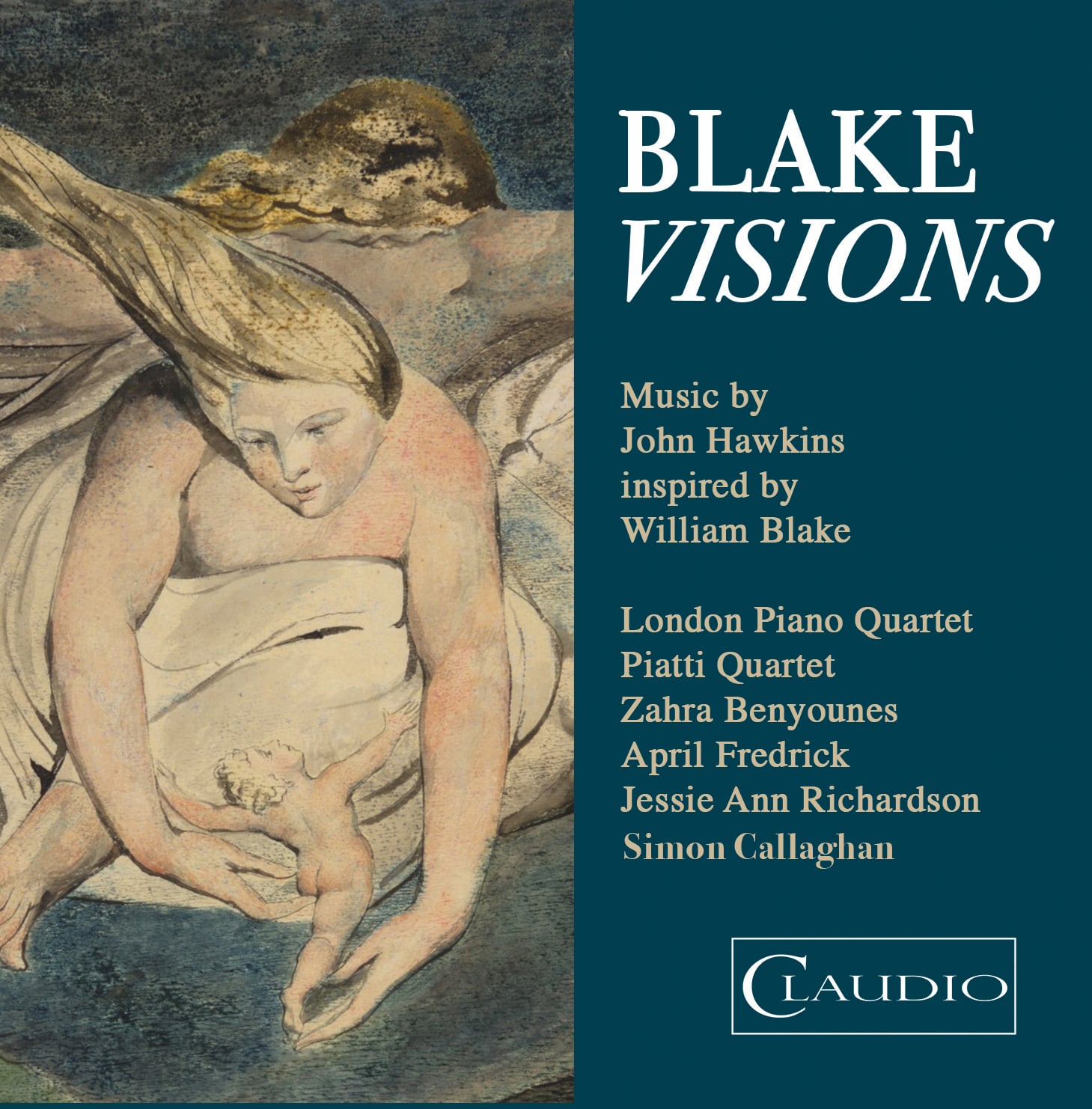
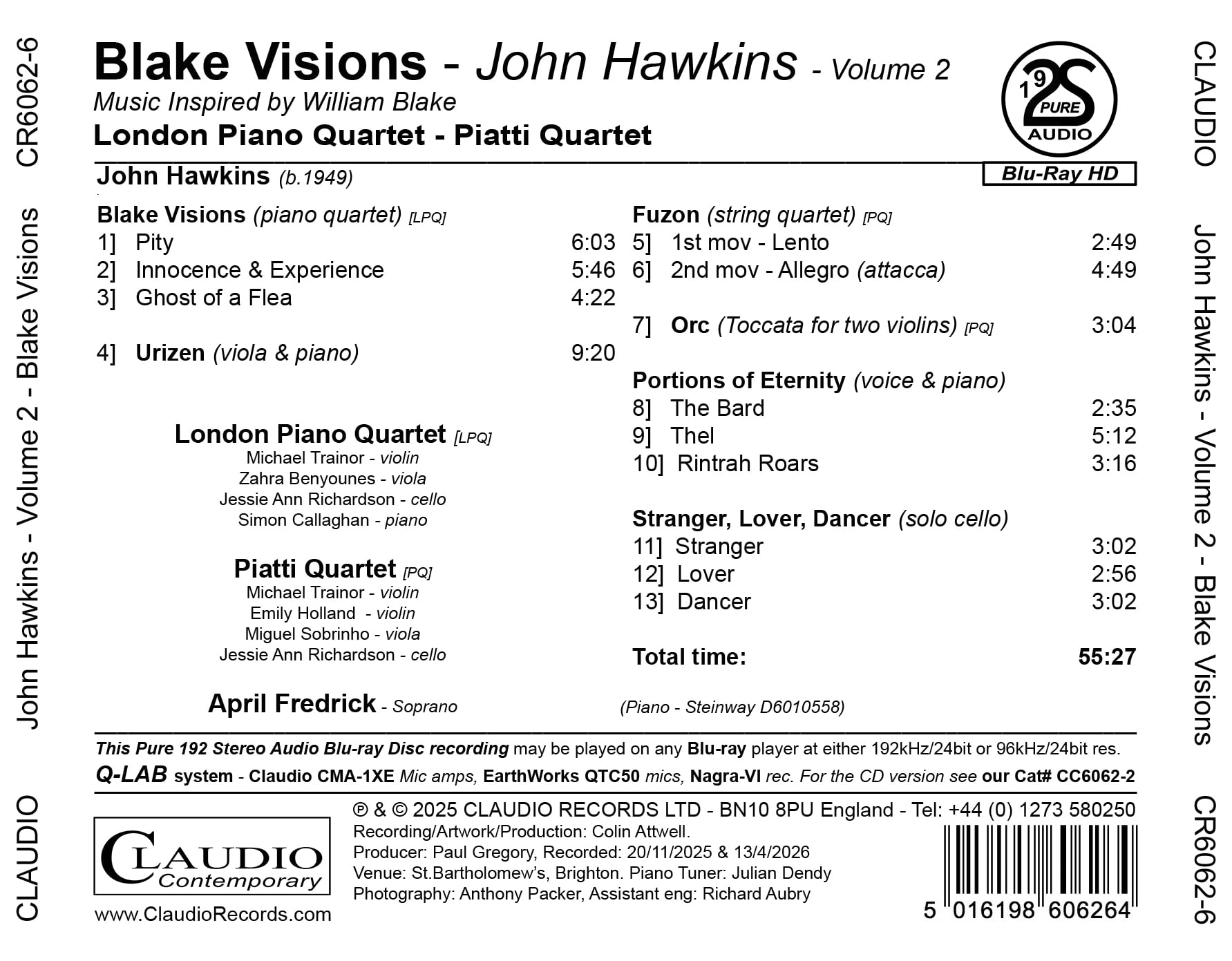
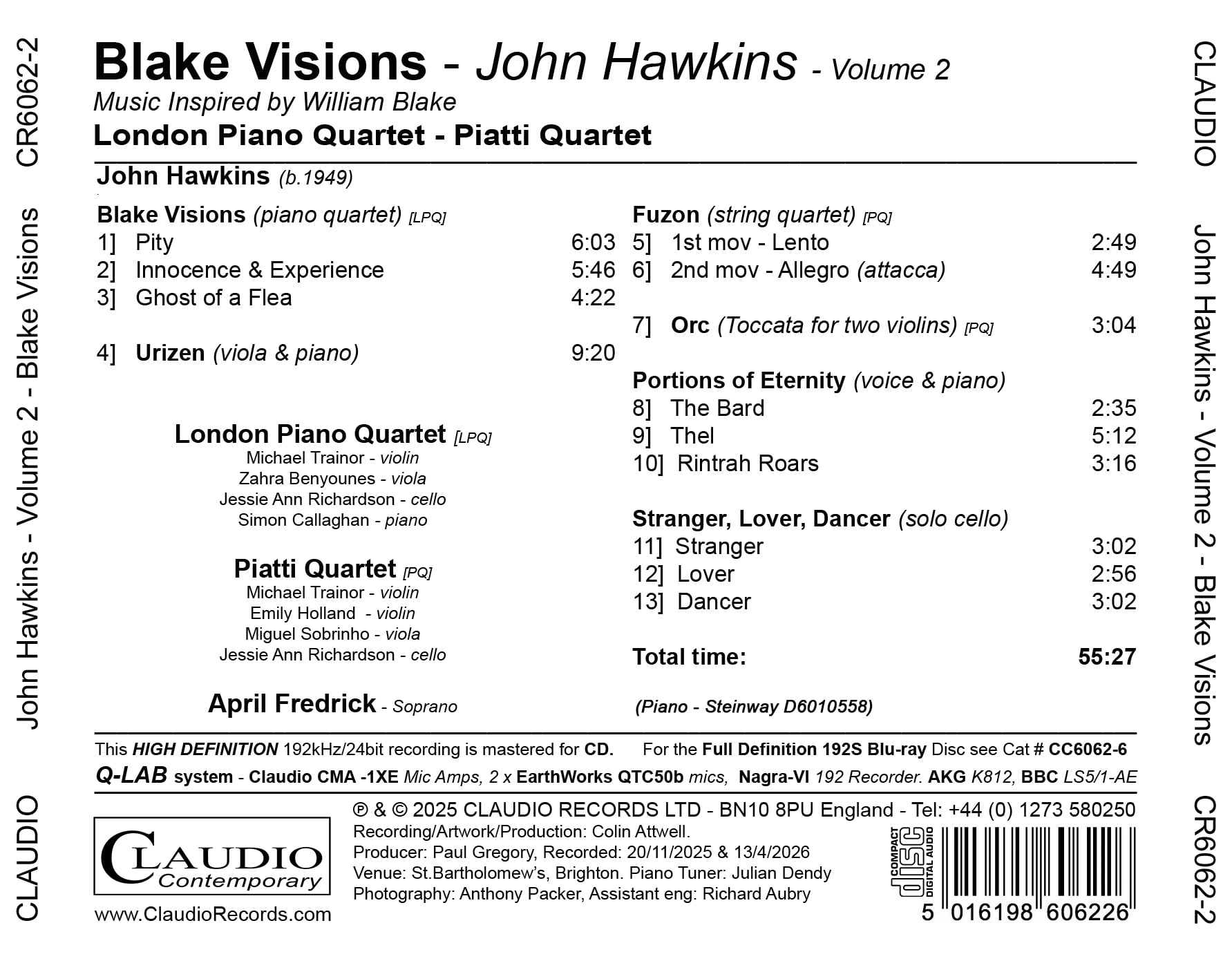
He writes: ‘Blake Visions is the most recent of my Blake pieces. In its three movements I have alternated the often apparently irreconcilable opposites common in Blake’s work. The first movement, ‘Pity’ follows Blake’s powerful print illustrating lines from Shakespeare’s Macbeth: ‘Pity, like a newborn babe striding the blast, or heaven’s cherubim, horsed upon the sightless couriers of the air.’ The piano begins by tolling the rhythm of the word ‘Pity’ while the strings suggest a cradling mood which is abruptly interrupted by the wild sightless horses. The second movement explores the contrast between Blake’s books of Innocence and Experience. Starting with the sound of a young piper, instructed by a child-like angel to write down his joyful songs but his playing is interrupted by hints of the lessons of experience and ends in vanishing emptiness. The final piece, The Ghost of a Flea, illustrates Blake’s bizarre vision in which, although one of his tiniest images, the flea appears monumentally threatening, ‘swaggering among shooting stars, carrying a bowl of blood’.
Urizen was the first of my Blake pieces. Commissioned by violist Paul Silverthorne, it also began my love of writing for the viola in combinations up to Tri for six violas! The title comes from one of Blake’s prophetic books, in which the character Urizen (perhaps ‘your reason’ or ‘your horizon’) is a dark, deadening force: ‘What demon hath formed this abominable void, this soul-shudd’ring vaccuum?’. Opening with a cadenza for solo viola, Urizen is tightly based on the four notes with which it begins. Later, Urizen’s power and energy emerge before dying away.
If Urizen represents a sterile oppressive figure, his son Fuzon is the embodiment of energy who, in Blake’s words, ‘On spike flames rose, his hot visage flam’d furious!’ The two short, linked movements of this string quartet open with slow repeated notes interrupted by dramatic outbursts. The repeated notes figure throughout the second movement, now transformed into a virtuosic presto. The quartet ends with pizzicato glissandi on the ‘cello while the first violin vanishes in rapid repeated notes. Fuzon was written for the Piatti Quartet who have since performed it many times.
Orc is another of Blake’s fiery characters as the ‘Lover of Wild Rebellion, and transgressor of God’s Law’ and is thus opposed to Urizen. He symbolizes the spirit of rebellion and freedom so dear to Blake. The piece is a short virtuoso toccata for two violins.
The title Portions of Eternity comes from Blake’s ‘The Proverbs of Hell’ of which one is ‘The roaring of lions, the howling of wolves, the raging of the stormy sea, and the destructive sword, are portions of eternity too great for the eye of man’. The first two settings are The Bard from Songs of Experience followed by extracts from The Book of Thel. To Thel’s famous motto ‘Can Wisdom be put in a silver rod?/ Or Love in a golden bowl?’ the answer is surely ‘No’. The last of the three songs, ‘Rintrah Roars’ – the poem which opens The Marriage of Heaven and Hell’ – was first performed by April Fredrick in a version with harp and piano.
Stranger, Lover, Dancer for solo ‘cello is the only piece not directly derived from Blake. It was written for Jessie Ann Richardson and first performed by her at the Cheltenham Festival in 2015. The three movements follow a path from mystery (via Walter de la Mare’s ‘Is there anybody there?’ said the Traveller, Knocking on the moonlit door’) through romantic love to a boisterous dance.
© 2026 John Hawkins
1. THE BARD
Hear the voice of the Bard!
Who Present, Past and Future sees
Whose ears have heard,
The Holy word,
That walk’d among the ancient trees.
Calling the lapsed Soul
And weeping in the evening dew: That might controll,
The starry pole;
And fallen fallen light renew!
O Earth! O Earth return!
Arise from out the dewy grass;
Night is worn,
And the morn
Rises from the slum’ brous mass.
Turn away no more:
Why wilt thou turn away?
The starry floor
The wat’ry shore
Is giv’n thee till the break of day.
2. THEL
Does the Eagle know what is in the pit?
Or wilt thou go ask the mole:
Can Wisdom be put in a silver rod?
Or Love in a golden bowl?
… she in paleness sought the secret air.
To fade away like morning beauty from her mortal day:
Down by the river of Adorna her soft voice is heard:
And thus her gentle lamentation falls like morning dew.
‘O life of this our spring! why fades the lotus of the water?
Why fade these children of the spring? born but to smile and fall?
Ah! Thel is like a wat’ry bow, and like a parting cloud;
Like a reflection in a glass; like shadows in the water;
Like dreams of infants, like a smile upon an infant’s face;
Like the dove’s voice; like transient day; like music in the air.
Ah! Gentle may I lay me down, and gentle rest my head,
And gentle sleep the sleep of death, and gentle hear the voice
Of him that walketh in the garden in the evening time.’
Does the Eagle know what is in the pit? Or wilt thou go ask the Mole:
Can Wisdom be put in a silver rod?
Or Love in a golden bowl?
3. RINTRAH
Rintrah roars and shakes his fires in the burden’d air;
Hungry clouds swag on the deep.
Once meek and in a perilous path,
The just man kept his course along
The vale of death.
Roses are planted where thorns grow,
And on the barren heath
Sing the honey bees.
Then the perilous path was planted:
And a river and a spring
On every cliff and tomb;
And on the bleached bones
Red clay brought forth.
Till the villain left the paths of ease,
To walk in perilous paths, and drive
The just man into barren climes.
Now the sneaking serpent walks
In mild humility,
And the just man rages in the wild
Where lions roam.
The London Piano Quartet
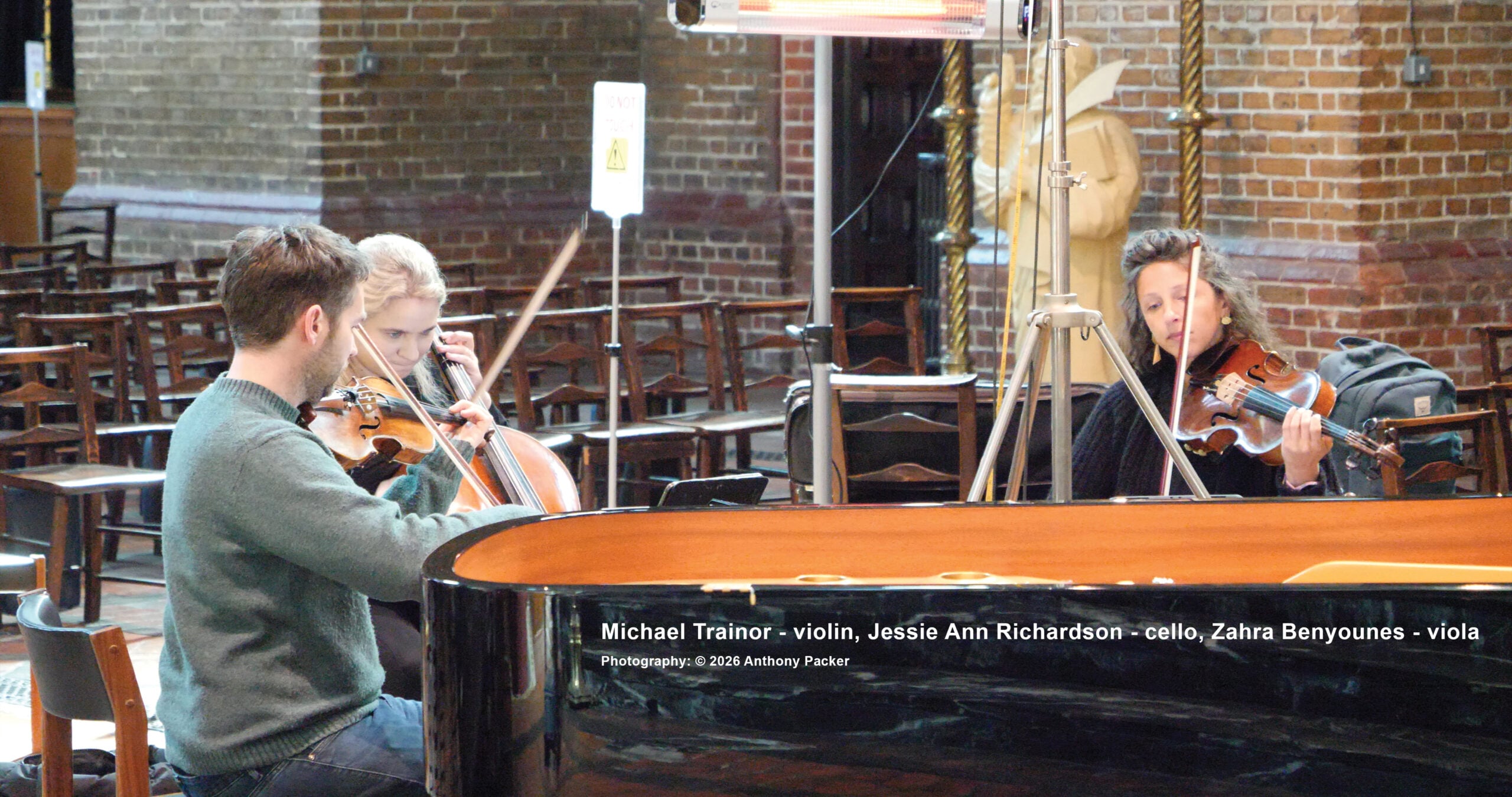
(Michael Trainor, violin, Zahra Benyounes, viola, Jessie Ann Richardson, cello, Simon Callaghan, piano)
Four distinguished chamber musicians in their own right, the London Piano Quartet brings a fresh vitality to the incredible depth of repertoire written for the genre. LPQ promises to champion new commissions alongside works that have been historically and unjustly neglected. All this is delivered by the players’ critically acclaimed panache and their unique manner of connecting to audiences.
London Piano Quartet – Website
The Piatti Quartet
(Michael Trainor, violin, Emily Holland, violin, Miguel Sobrinho, viola, Jessie Ann Richardson, cello)
Resident Quartet at Kings Place, London, the Piatti Quartet are renowned for their ‘profound music making’ (The Strad) and their ‘lyrical warmth’ (BBC Music Magazine). Since their prizewinning performances at the 2015 Wigmore Hall International String Quartet Competition, they have performed all over the world with numerous international broadcasts.
Piatti Quartet- Website
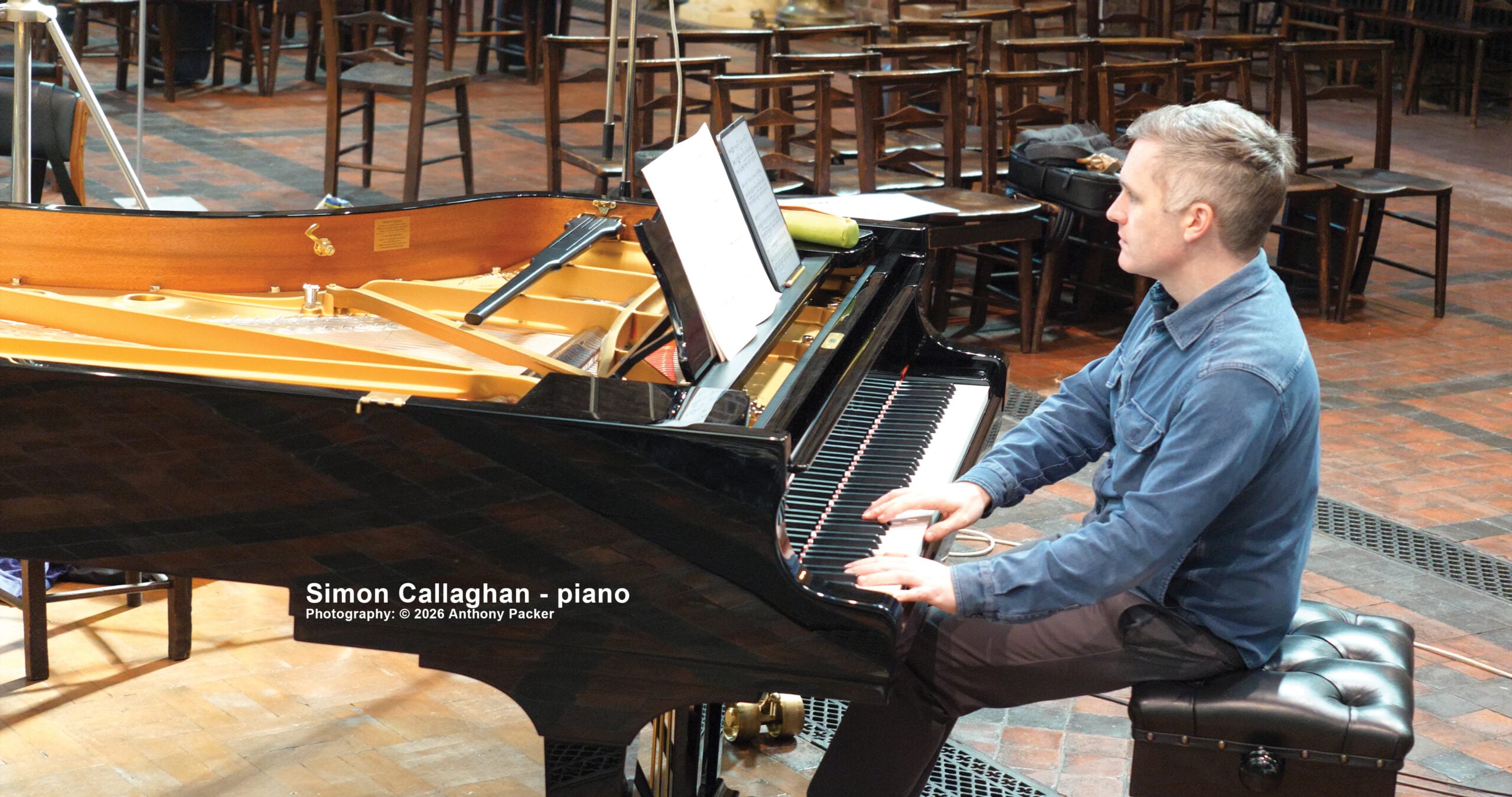
Simon Callaghan, a founding member of the London Piano Quartet, performs internationally as a soloist and chamber musician in parallel with a highly successful career as a recording artist. As concerto soloist, he appears regularly in the UK’s major concert halls, and on tours to Asia, North America and Europe. Simon’s discography includes recordings for Hyperion, Nimbus and Lyrita. His duo partnership with BBC Young Musician of the Year Finalist Coco Tomita saw their second record released in 2024 passing one million streams in the first month of its release. A cornerstone of his work is his commitment to British music, and he has begun a series on Lyrita, recording world premieres of British concertos.. He is Artistic Director at London’s Conway Hall, Professor of Piano at the Royal Northern College of Music and was elected a Steinway Artist in 2012.
Zahra Benyounes was founding member of the prize-winning Benyounes Quartet for sixteen years, performing at leading venues and festivals including Wigmore Hall, Vienna Konzerthaus, Aldeburgh and Aix-en-Provence and giving multiple radio broadcasts. The quartet also premiered many works for string quartet by contemporary composers. She has recently embarked on a new venture with her love for the viola and co-founded the London Piano Quartet in 2022. For the last nine years Zahra has been co-Artistic Director of the South Downs Summer Music Festival with violinist Emily Holland.
Cellist Jessie Ann Richardson, became an Associate of the Royal Academy of Music in 2017 and teaches chamber music at the Royal College of Music. Having studied at the Purcell School, then at the Royal Academy of Music with David Strange and Moray Welsh, Jessie won the Herbert Walenn Prize for cello. Jessie is a founding member of the renowned Piatti Quartet, Resident Quartet at Kings Place which has won many prizes including international prize winners in the 2015 Wigmore International String Quartet Competition. Jessie has recorded chamber music CDs for the labels Hyperion, Chandos, Rubicon, Linn Records, Signum Records, Toccata, Resonus, NMC, Delphian and RTF Classical. Jessie plays a Celoniatus Cello made in 1741 around Turin kindly lent to her by a patron of the Beares International Violin Society.
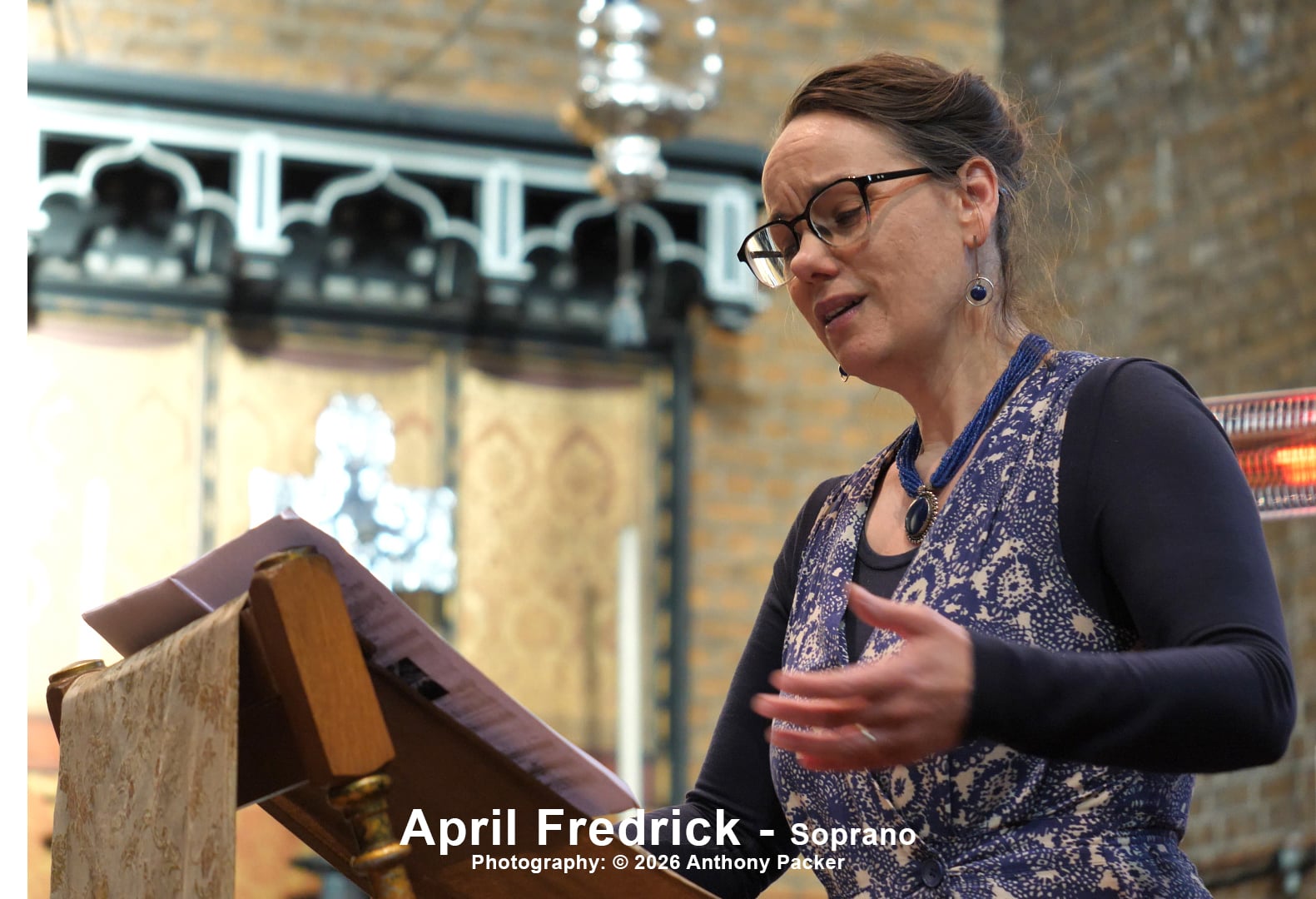
April Fredrick (soprano) is a frequent soloist with orchestras across the UK and a champion of new work on both the concert and opera stage. She has recorded multiple albums for SOMM and Nimbus, is a affiliate artist of the English Symphony Orchestra, and is a frequent soloist with the Colorado MahlerFest and Nottingham Harmonic Choir. Recent work includes a recording of Grace Williams’ Missa Cambrensis with BBC National Orchestra of Wales, Mahler’s Symphony No. 8 with the Bach Choir and the Philharmonia, and Strauss’ Vier Letzte Lieder and Beethoven Symphony no. 9 at the Colorado MahlerFest.
April Fredrick – Website
Huge thanks to Colin Attwell who patiently recorded the sessions and to Paul Gregory who produced and edit them.
The cover image is a detail from Blake’s ‘Pity’ with thanks to the Metropolitan Museum of Art, NY
© 2026 John Hawkins
EARLIER VOLUME REVIEWS
Some reviews of John Hawkins’s music:
‘A name to remember’ (Gramophone)
‘. . . a wealth of opportunities, readily seized, for economical but effective musico-dramatic gestures….
All make their evocative points in an instant.’ (The Observer)
“… clearly the work of a distinguished musician who obviously has things to say and who knows how to
say them in accessible, communicative terms likely to appeal to larger audiences without ever
compromising or writing down to them …’ (MusicWeb International)
‘… academic complexities do not trouble the ear, which is constantly entertained and alternately
assuaged and assaulted by an endlessly fascinating stream of sounds.’ (Music and Musicians)
‘Hawkins has a gift for creating miniatures which have a heft and resonance well beyond their modest
duration’ (Musical Opinion)